
Nearly 93 percent of online experiences start with a search engine, yet few people truly grasp the powerful algorithms working behind the scenes. These invisible digital processes decide what information you see, shaping everything from quick answers to in-depth research. Understanding how search engine algorithms work is more than a tech curiosity—it is a crucial skill for anyone who wants to boost visibility, attract traffic, and stay ahead in the fast-changing digital world.
Defining Search Engine Algorithms And Their Role
Search engine algorithms represent complex computational processes designed to retrieve, analyze, and rank digital content with remarkable precision and speed. According to research from ijariit, these sophisticated systems utilize multiple interconnected algorithms to transform massive digital information landscapes into coherent, relevant search results.
At their core, search engine algorithms function like intelligent digital librarians, employing intricate ranking mechanisms to determine which web pages best match a user’s query. As analyzed by drpress, these algorithms evaluate numerous factors including keyword relevance, content quality, website authority, and user engagement metrics to deliver the most accurate information possible.

The fundamental components of search engine algorithms typically include:
- Crawling Algorithms: Systematically explore and index web content
- Indexing Mechanisms: Organize and store discovered information for rapid retrieval
- Ranking Systems: Evaluate and prioritize content based on multiple sophisticated signals
- Query Processing Algorithms: Interpret user search intent and match relevant results
Modern search algorithms have evolved far beyond simple keyword matching, incorporating machine learning and artificial intelligence to understand context, user intent, and semantic relationships between information. These advanced systems continuously adapt, learning from user interactions to improve search result accuracy and relevance.
For businesses and content creators, understanding these algorithmic processes is crucial. Web Design for SEO becomes essential as search engines increasingly prioritize websites that provide comprehensive, high-quality user experiences alongside technically optimized content.
Major Types Of Search Engine Algorithms Explained
Search engine algorithms are complex systems comprised of multiple specialized algorithmic approaches designed to deliver precise and relevant search results. According to research from ijert, these sophisticated computational frameworks involve intricate mechanisms that assess and rank digital content with remarkable accuracy.
The primary categories of search engine algorithms can be broadly classified into several critical types:
Here’s a comparison of the main types of search engine algorithms and their core functions:
| Algorithm Type | Primary Purpose | Key Evaluation Factors |
|---|---|---|
| Crawling Algorithms | Discover and map web content | URL discovery Site structure Freshness |
| Indexing Algorithms | Organize and catalog information | Content structure Metadata Content type |
| Ranking Algorithms | Prioritize content relevance | Link analysis Authority User engagement |
| Query Processing | Interpret user search intent | Query context Synonym matching Intent |
- Crawling Algorithms: Discover and map web content
- Indexing Algorithms: Organize and catalog discovered information
- Ranking Algorithms: Evaluate and prioritize content relevance
- Query Processing Algorithms: Interpret user search intent
Specifically, ranking algorithms represent the most complex and dynamic component of search engine systems. En.wikipedia highlights the SALSA algorithm as an exemplary approach, which assigns scores to web pages based on their interconnectedness and authority within digital networks. These algorithms consider factors like link structures, content quality, user engagement metrics, and website credibility to determine search result positioning.
Modern search algorithms increasingly leverage machine learning and artificial intelligence to enhance their understanding of context, semantic relationships, and user intent. This evolution means search engines can now interpret nuanced queries, understand user preferences, and deliver increasingly personalized search experiences.
For businesses seeking to optimize their online presence, understanding these algorithmic nuances becomes crucial. Google Ads Campaign Types can provide additional insights into how digital marketing strategies intersect with search engine algorithmic processes, helping organizations develop more sophisticated online visibility strategies.
How Search Algorithms Rank Websites And Content
Search algorithms employ sophisticated mechanisms to evaluate and rank websites, transforming the vast digital landscape into organized, relevant search results. According to groundbreaking research from arxiv, distributed randomized algorithms play a critical role in computing PageRank, a fundamental method for assessing web page importance based on intricate link structures and interconnectedness.
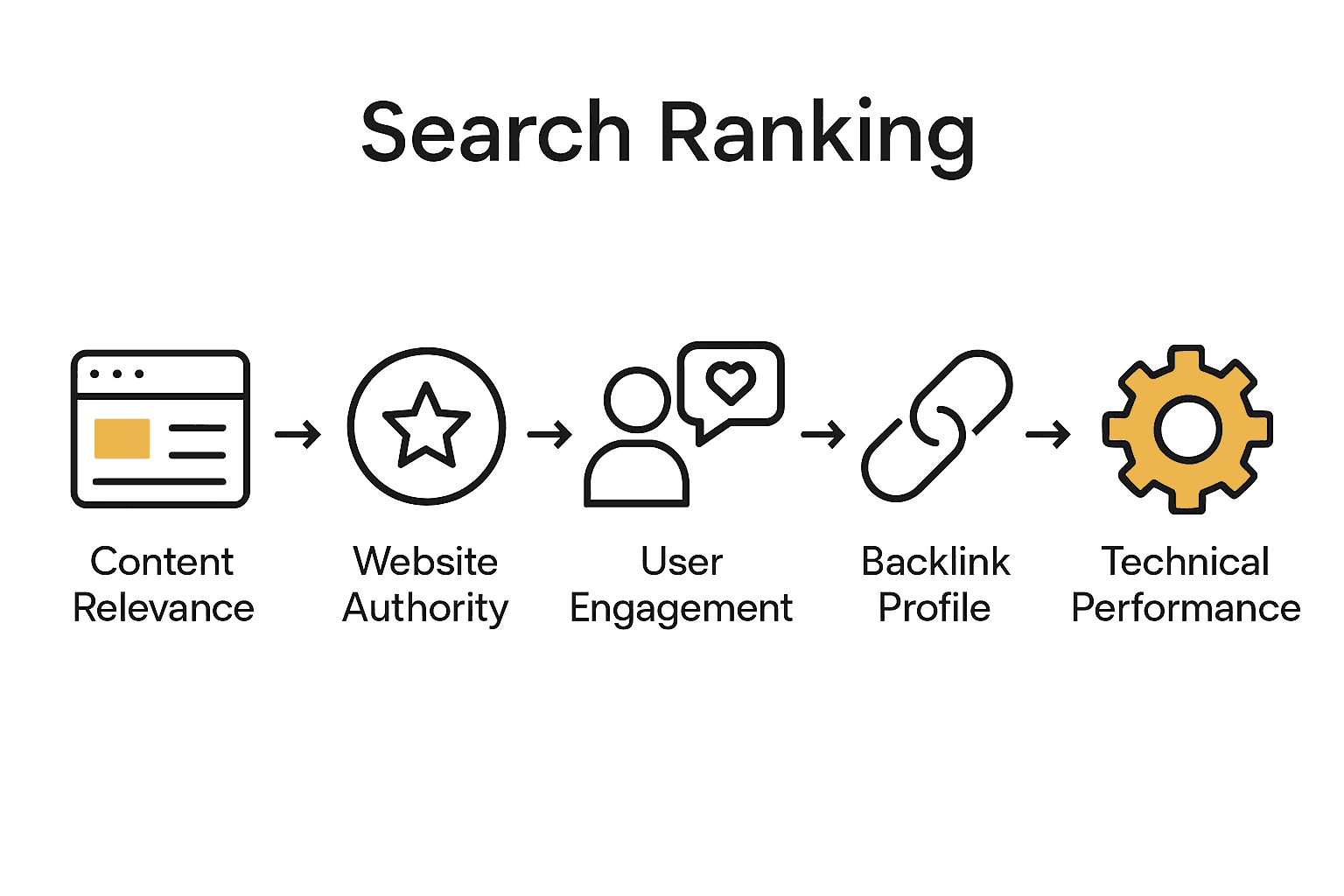
The ranking process involves multiple sophisticated evaluation criteria:
- Content Relevance: Quality and match to search query
- Website Authority: Domain credibility and expertise
- User Engagement Metrics: Click-through rates, time on page
- Backlink Profile: Quality and quantity of external references
- Technical Performance: Site speed, mobile responsiveness
Arxiv research on intelligent search optimization highlights how artificial fuzzy logics have revolutionized content ranking. These advanced algorithms now incorporate machine learning techniques that go beyond simple keyword matching, analyzing semantic context, user intent, and complex relationship networks between digital content.
Modern search ranking isn’t just about keywords. It’s a nuanced evaluation of comprehensive digital ecosystem signals. Websites must demonstrate expertise, provide valuable user experiences, and maintain technical excellence to achieve high search rankings.
 This means creating high-quality, original content, ensuring fast and responsive website performance, and building genuine authority within your specific domain.
For businesses looking to improve their search rankings, understanding these algorithmic nuances is crucial. How to Do Linkbuilding for SEO offers deeper insights into developing strategies that align with these complex ranking mechanisms, helping organizations navigate the intricate world of search engine optimization.
Impact Of Core Updates And Algorithm Changes
Search engine algorithms undergo continuous evolution, with core updates fundamentally reshaping digital visibility landscapes. According to research from drpress, these algorithmic transformations represent strategic shifts that dramatically impact how websites are evaluated, ranked, and presented in search results.
Core algorithm updates typically target several critical areas:
- Content Quality: Elevating authoritative, comprehensive content
- User Experience: Prioritizing sites with superior navigation and engagement
- Technical Performance: Rewarding fast, mobile-responsive websites
- Semantic Understanding: Improving context and intent recognition
- Authenticity: Reducing manipulative SEO tactics
ijert research highlights that these updates are not random modifications but calculated strategies designed to improve search result relevance. Core updates can cause significant ranking fluctuations, sometimes dramatically shifting website positions overnight, making adaptability crucial for digital survival.
Successful navigation of algorithmic changes requires a proactive, holistic approach. Businesses must continuously monitor industry trends, maintain high-quality content standards, ensure technical website excellence, and develop genuine user-centric strategies. This means creating valuable, original content, maintaining excellent site performance, and building authentic digital authority.
For organizations seeking to understand and leverage these complex algorithmic dynamics, Search Engine Optimization provides comprehensive insights into developing resilient digital marketing strategies that can withstand and capitalize on continuous search engine transformations.
Optimizing For Algorithms: Best Practices And Mistakes
Optimizing for search algorithms requires a sophisticated, nuanced approach that balances technical precision with genuine value creation. According to research from arxiv, intelligent search optimization involves understanding artificial fuzzy logics that go far beyond traditional keyword manipulation.
Key best practices for algorithmic optimization include:
- Create Comprehensive Content: Develop in-depth, authoritative resources
- Prioritize User Experience: Design websites that are intuitive and engaging
- Maintain Technical Excellence: Ensure fast, mobile-responsive performance
- Build Authentic Backlinks: Develop genuine, high-quality referral networks
- Focus on Semantic Relevance: Understand and address user intent
Drpress highlights critical mistakes that can negatively impact search rankings. Algorithmic penalties often result from attempts to manipulate search results through outdated tactics like keyword stuffing, low-quality backlinks, or duplicative content. Modern search algorithms are sophisticated enough to detect and punish such artificial optimization strategies.
Successful optimization is about creating genuine value, not gaming the system. This means developing high-quality, original content that truly addresses user needs, maintaining a technically superior website, and building authentic digital authority through consistent, valuable contributions to your industry. Search algorithms reward websites that demonstrate expertise, authenticity, and a commitment to user experience.
For businesses seeking to develop robust optimization strategies, Stop Googling Your Keywords provides critical insights into understanding and navigating the complex landscape of modern search engine algorithms.
Unlock the Power Behind Search Engine Algorithms with Expert SEO Support
Navigating the complexities of search engine algorithms can feel overwhelming especially when factors like content quality, user engagement, and technical performance directly impact your website’s rank and visibility. This comprehensive guide sheds light on crucial topics such as ranking systems, query processing, and the importance of adapting to core algorithm updates. If you are striving to not only understand these intricate processes but also harness them to elevate your digital presence, you are in the right place.
Don’t let algorithm changes disrupt your business growth. Partner with Fleek Consulting to implement proven strategies in Search Engine Optimization – Fleek Consulting and Local SEO – Fleek Consulting. Our AI-driven systems and expert web development services ensure your site is optimized for both users and search engines. Take control today and start climbing the ranks with confidence on your side.
Frequently Asked Questions
What are search engine algorithms?
Search engine algorithms are complex computational processes used by search engines to retrieve, analyze, and rank digital content, ensuring relevant and accurate results for user queries.
How do search algorithms rank websites?
Search algorithms rank websites based on multiple criteria, including content relevance, website authority, user engagement metrics, backlink profiles, and technical performance like site speed and mobile responsiveness.
What is the role of updates in search engine algorithms?
Core updates in search engine algorithms aim to enhance the quality of search results by focusing on content quality, user experience, technical performance, semantic understanding, and authenticity while penalizing manipulative SEO practices.
What are some best practices for optimizing for search algorithms?
Best practices for optimizing include creating comprehensive, high-quality content, prioritizing user experience, maintaining technical excellence, building authentic backlinks, and focusing on semantic relevance to user intent.